
Measles
What to Do If You Think You Have Measles
If you think you were exposed to measles:
Call your health care provider or local health department right away.
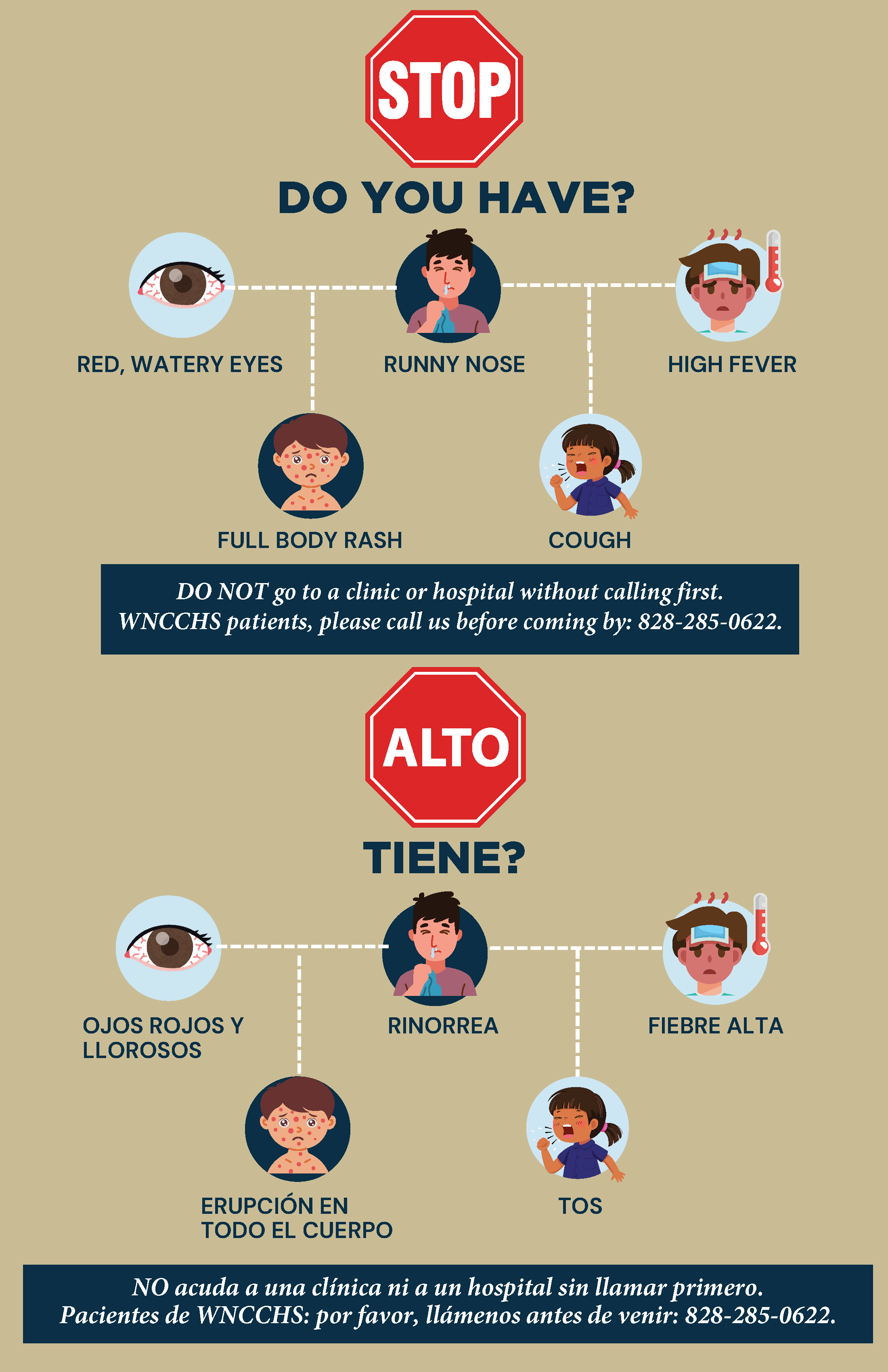
Do not go to a clinic or hospital without calling first. WNCCHS patients, please call WNCCHS before coming to the clinic: 828-285-0622. Measles spreads very easily through the air, so calling ahead helps protect other patients and staff.
Monitor yourself for symptoms for 21 days after exposure
In some cases, a vaccine or medication may help reduce your risk of illness if given soon after exposure.
WNCCHS is following guidance from Buncombe County Health and Human Services and the North Carolina Department of Health and Human Services to safely evaluate suspected measles cases.
If you call with symptoms or possible exposure, our care team may:
Ask screening questions about symptoms, travel, and possible exposure
Provide instructions before you come to the clinic
Ask you to wear a mask and move quickly to a private room if an in-person visit is needed
Coordinate testing and follow-up with the local health department
This process helps reduce the risk of measles spreading to others while ensuring you receive appropriate care.

What Patients Need to Know About Measles
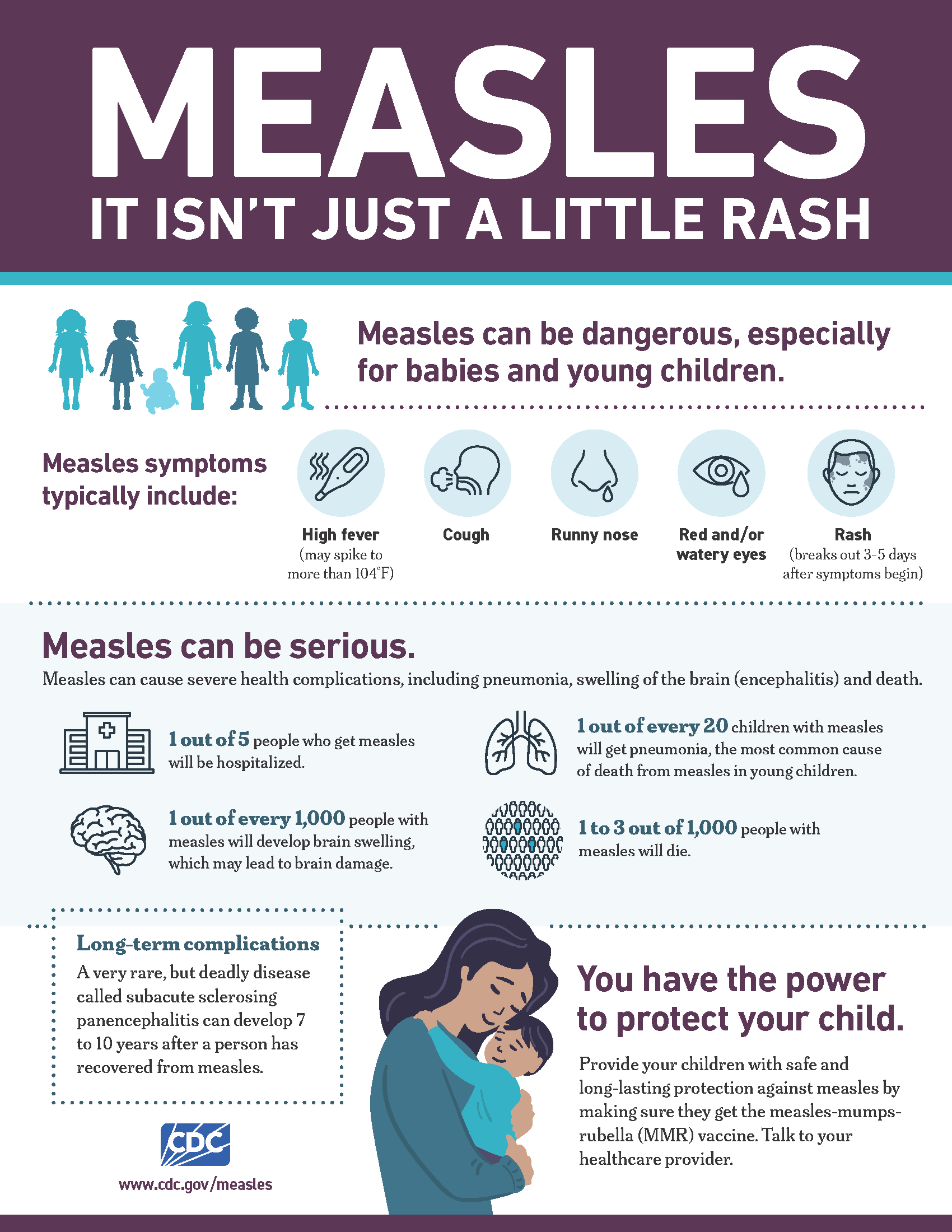
Measles is a very contagious illness that can be serious—especially for babies and young children. Anyone who is not protected against measles is at risk. Measles symptoms usually begin 7 to 14 days after infection.
Signs and Symptoms: Measles often starts with:
High fever (can spike above 104°F)
Cough
Runny nose
Red, watery eyes (conjunctivitis)
A measles rash usually appears 3 to 5 days after symptoms begin. It often starts on the face at the hairline and spreads downward to the rest of the body.
How it Spreads: Measles spreads through the air when an infected person coughs or sneezes. You can get measles by being in a room where someone with measles has been—even up to 2 hours after they leave.
A person with measles can spread it to others from 4 days before through 4 days after the rash appears.
Prevention: The best way to prevent measles is with the MMR (measles, mumps, rubella) vaccine. Two doses provide strong protection against measles. If you are not sure about your vaccination status, talk with a health care provider about checking your records or getting vaccinated.
For more detailed guidance, visit the Buncombe County Health and Human Services and the North Carolina Department of Health and Human Services websites.
What to Do If You Think You Were Exposed
Measles spreads very easily. If you think you may have been exposed, follow these steps:
1) Check exposure locations and dates
North Carolina posts exposure locations and dates. Exposure can happen if you shared indoor space with someone contagious, or you entered an indoor space within two hours after they left.
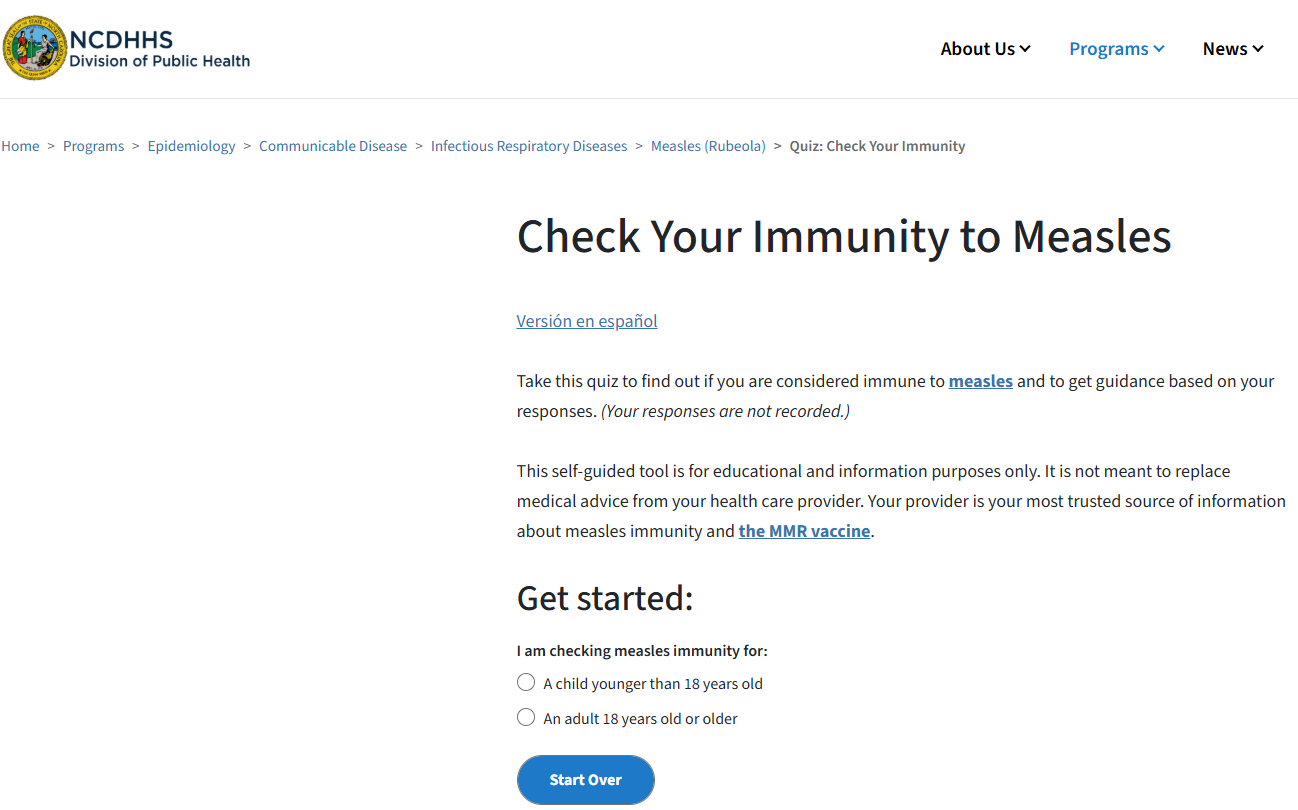
2) Check your immunity
You are unlikely to get measles if you received the MMR vaccine or have other evidence of immunity. If you are not sure, a health care provider or your local health department can help.
If you are NOT immune:
Call your health care provider or local health department as soon as possible
Call before going in and tell them you may have been exposed
Your provider may recommend MMR vaccine or immune globulin (a medicine that can reduce risk)
Stay home for 21 days after exposure and monitor for symptoms
Vaccination
The best protection against measles is the MMR (measles, mumps, rubella) vaccine. Two doses provide the best protection.
MMR vaccine effectiveness:
1 dose: about 93% effective at preventing measles
2 doses: about 97% effective at preventing measles
If you don’t know your vaccination status, try to find your records. If you don’t have written documentation of MMR vaccine, talk with a health care provider — there’s no harm in getting another dose if you may already be immune.
Frequently Asked Questions
-
Measles is a very contagious viral illness that spreads through the air when an infected person coughs or sneezes. It can cause fever, cough, runny nose, red eyes, and a rash that spreads across the body. In some cases, measles can lead to serious complications such as pneumonia, brain swelling, or hospitalization.
-
Anyone who is not protected against measles can get sick. People at higher risk for serious illness include:
Babies and young children
Pregnant people
Adults who are not vaccinated
People with weakened immune systems
-
According to the CDC and the Advisory Committee on Immunization Practices (ACIP), you are considered protected if you have one of the following:
Written records showing two doses of the MMR vaccine (for school-aged children and high-risk adults)
Written records showing one dose of MMR vaccine (for most adults not in high-risk settings)
Laboratory confirmation of immunity
Laboratory confirmation of past measles infection
You were born before 1957, when measles was very common
If you are unsure about your vaccination history, talk with a health care provider.
-
Most adults who received the MMR vaccine as children do not need another dose. However, some adults may need vaccination if they:
Do not have written vaccination records
Are traveling internationally
Work in health care
Are students in college or other post-secondary education settings
A health care provider can help determine if vaccination is recommended.
-
If you think you were exposed:
Call your health care provider or local health department right away
Do not go to a clinic or hospital without calling first
Monitor yourself for symptoms for 21 days after exposure
In some cases, a vaccine or medication may help reduce your risk of illness if given soon after exposure.
-
Check with your vaccination provider or the Buncombe County Immunizations Clinic.Your provider can check the North Carolina Immunization Registry.
In Buncombe County, contact the Buncombe County Immunization Clinic via email at Immunizations@buncombenc.gov or call 828-250-5096.
Check school or military records. Most K-12 schools, colleges and universities keep student vaccine records on file. Records may be on file for a year or two after graduation or transfer.
Check your family records. You may have kept vaccine records in baby books, camp applications, or old medical records.
Got a vaccine out of state?Find out if a state has a vaccine database like North Carolina. If so, your previous provider may be able to access your records there.
Note: If you don't have record of previous vaccinations, you're considered susceptible to disease. You will need to get vaccinated again. It's not harmful to get additional vaccine doses.